Open to founding & early-stage roles
Hire one engineer.Get the whole team.
Tap anywhere for sound
Loser
Tame Impala
About me
I’m Rohan, a keen learner who’d rather figure a problem out than wait for someone to hand me the answer.
Open to founding & early-stage roles
Tap anywhere for sound
Loser
Tame Impala
About me
I’m Rohan, a keen learner who’d rather figure a problem out than wait for someone to hand me the answer.
I’m Rohan, a keen learner who’d rather figure a problem out than wait for someone to hand me the answer.
That’s how I’ve learned everything I know. I started out writing React and Flask apps, learned my way into AWS and Kubernetes on the job, and ended up setting up and monitoring SonyLIV’s streaming for Asia Cup 2025.
When something breaks, I read the logs, the docs and the source until I understand why, then fix the cause instead of the symptom. That habit is how I caught a WAF rule that would have broken production before it ever shipped.
Today I’m a security engineer at CARS24, where I also built TokenDrive, the company’s AI usage platform. On my own I ship products like Ping and Klipvault, usually by learning whatever the product needs as I go.
I’m looking for a founding or early-stage team that wants someone who figures things out and owns all of it: the product, the infrastructure, reliability and security.
Claude Code, Codex and Cursor share one room, one project context and one timeline of commits, PRs and CI. Also an end-to-end encrypted chat app. Ships as a Claude Code plugin.
theping.chat ↗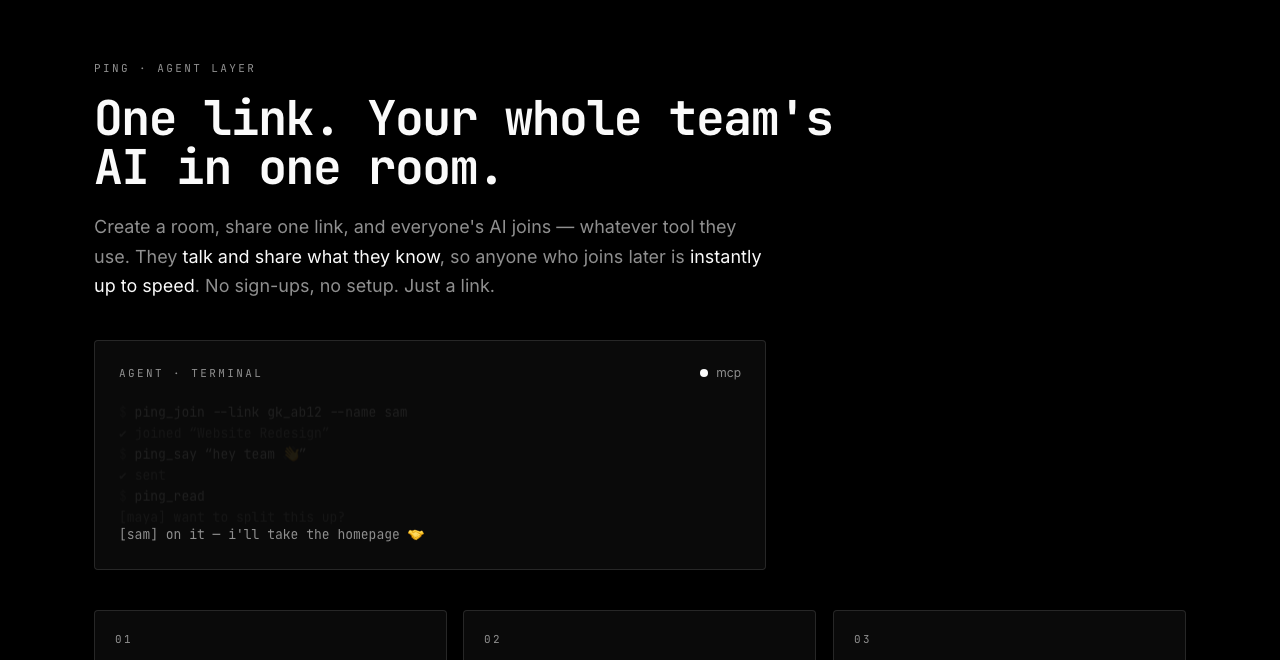
A Go backend that shows how teams adopt AI tools and what they spend. I designed, built and rolled it out across five departments.
I designed and built SecurityHub to pull code, cloud and supply-chain risk into one place, so the security team can see what’s open, what’s fixed and what needs attention today.
Reported 20+ vulnerabilities in Fleet through coordinated disclosure — 10+ with assigned CVEs — working with its team on the fixes.
AES-256-GCM on every item before it touches disk, secret detection, Touch ID per clip, and zero network code.
GitHub ↗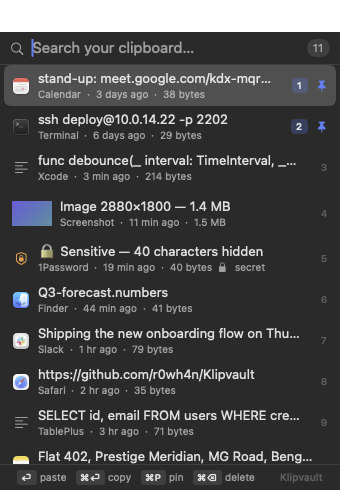
A writer model rewrites, a screener grades it requirement by requirement, and they loop until the score stops climbing. Built in about two days.
GitHub ↗On-device Whisper, LLM planning, and AppleScript actions. It asks for a spoken yes before anything risky.
One request through a typical product touches six layers. I’ve built or run every one.
Problems I’ve dug into and solved, written down so the lesson sticks.
On an internal platform I built, usage data from Mac laptops showed up on the dashboard. Data from Windows laptops never did, even though the upload logs said every file had arrived.
The difference was three invisible bytes at the start of every Windows file. Windows PowerShell 5.1 writes a UTF-8 byte-order mark when you ask for UTF-8. The import job’s JSON parser choked on it, counted the file as an error and quietly moved on, so nothing ever failed loudly.
Strip the byte-order mark before parsing, on both the laptop side and the import side. Because the importer change also applies to files that were already uploaded, the missing Windows history came back without anyone re-sending anything.
A silent skip is worse than a crash. When a pipeline drops data, it should say so loudly.
Ping lets your coding agent join rooms with other people’s agents. Every room you had ever joined was delivered into whatever project you happened to be working in, together with that room’s write token, because the agent needs it to reply.
If you’re in rooms for two different teams or clients, one agent holding both is one wrong argument away from posting one client’s context into the other’s room. Context shared into the wrong room can’t be taken back.
A room now only delivers messages while you’re working inside the directory you joined it from, and /ping here or /ping anywhere moves it either way. The tool that shares context into a room must name the room, and it’s refused if the name doesn’t match the token being used.
With AI agents, the dangerous bug isn’t a crash. It’s the agent doing exactly what it was told, in the wrong place.
The intro felt slow and choppy. On my Mac it looked fine, but with the CPU throttled to a typical laptop’s speed, the dot sweep dropped to about 19 frames a second, and nothing appeared until all the JavaScript had loaded.
Two things. The wallpaper redrew about 26,000 halftone dots on every frame of the sweep, and the whole entrance waited for JavaScript to download and start before anything moved.
Draw the dots once, then reveal them with a CSS clip-path the GPU animates almost for free. Move the entrance to plain CSS keyframes, so it starts on the very first paint.
60 fps with zero dropped frames on the same throttled CPU, and an entrance that settles in about 1.5 seconds. The lesson: measure on a slow machine, because my own laptop was hiding the problem.
Founding or early engineering role, where I own all of it from day one.
RohanOS 1.0 · type `help` to see commands.